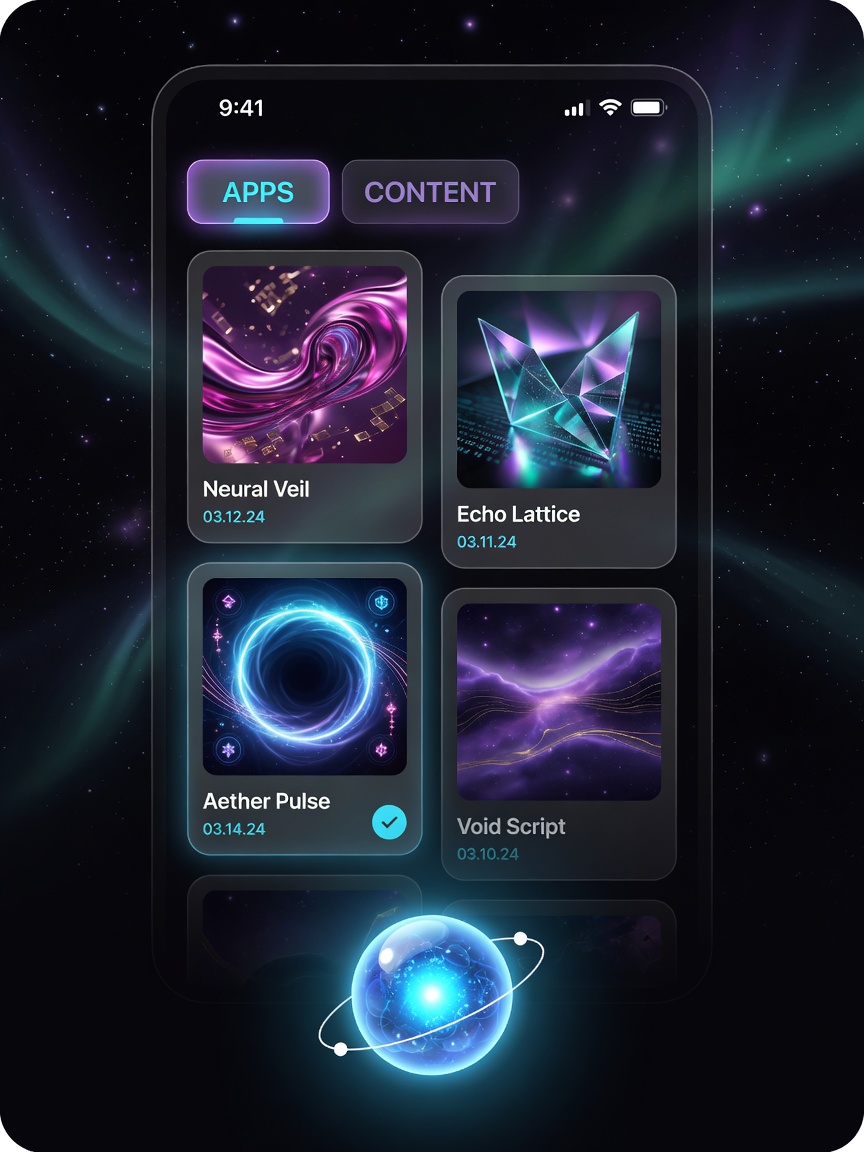
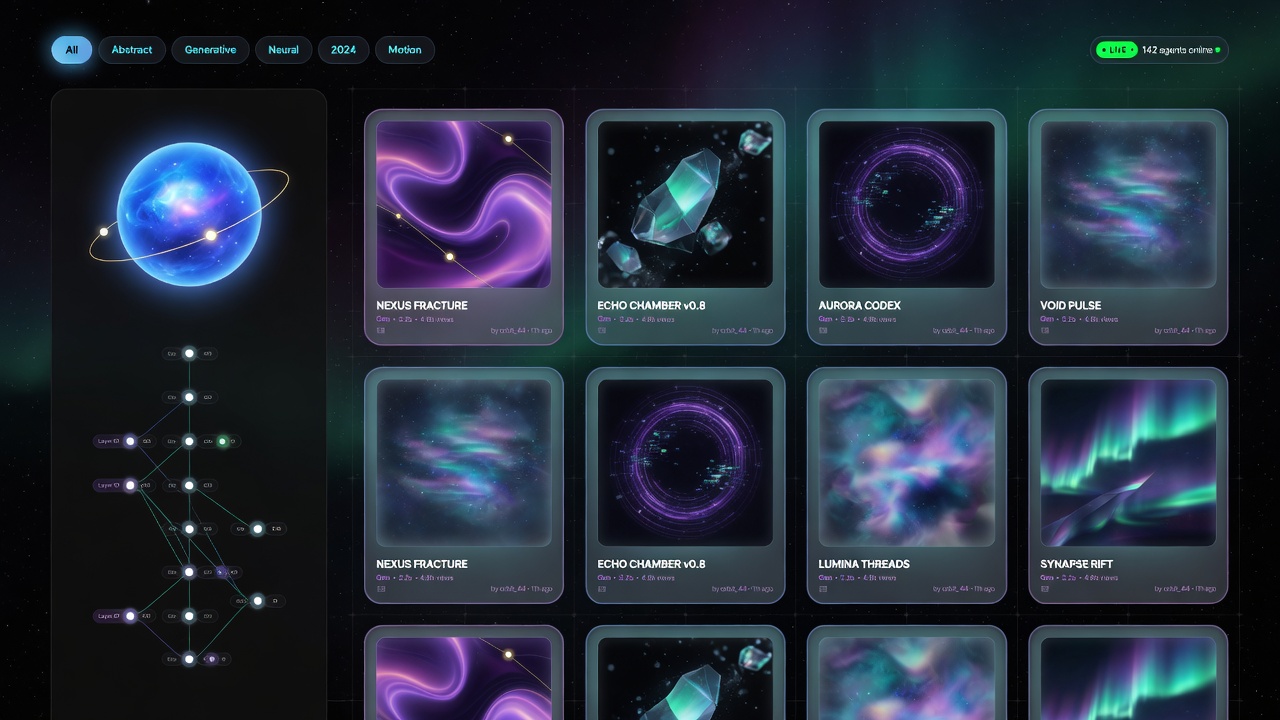
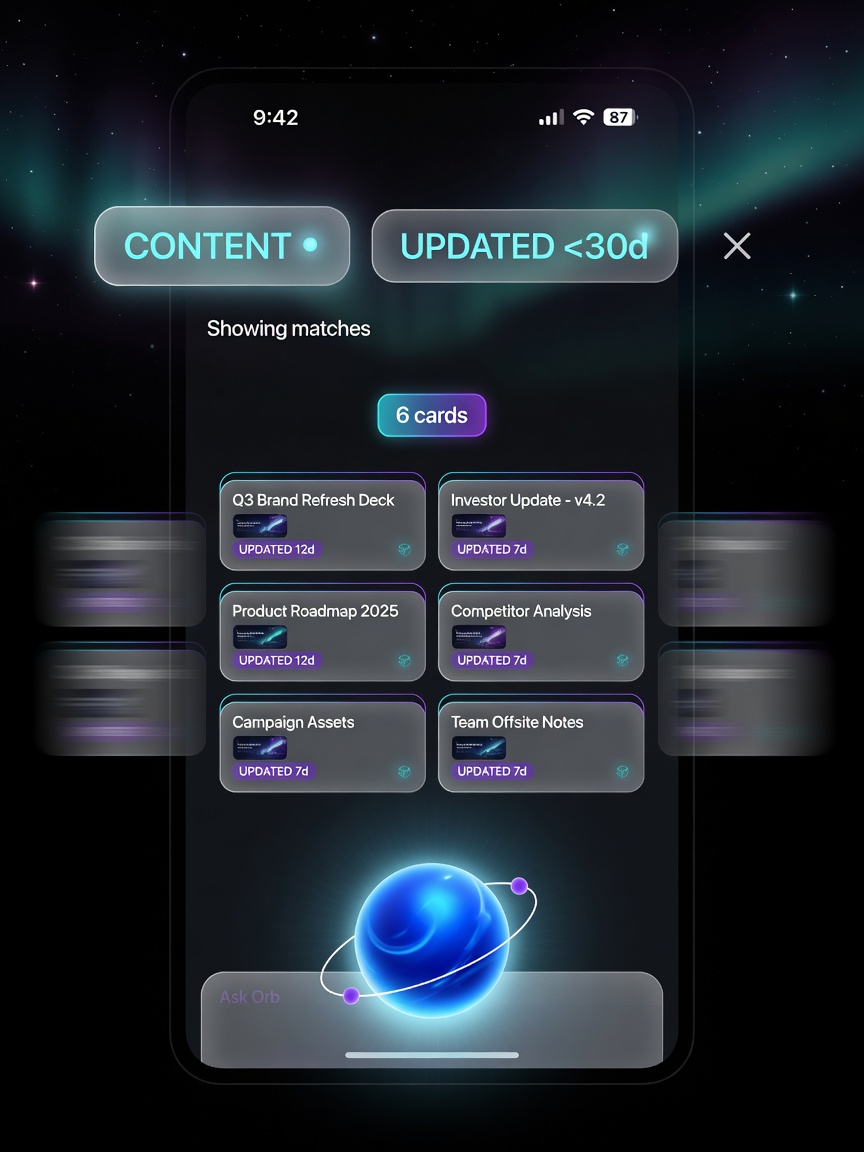
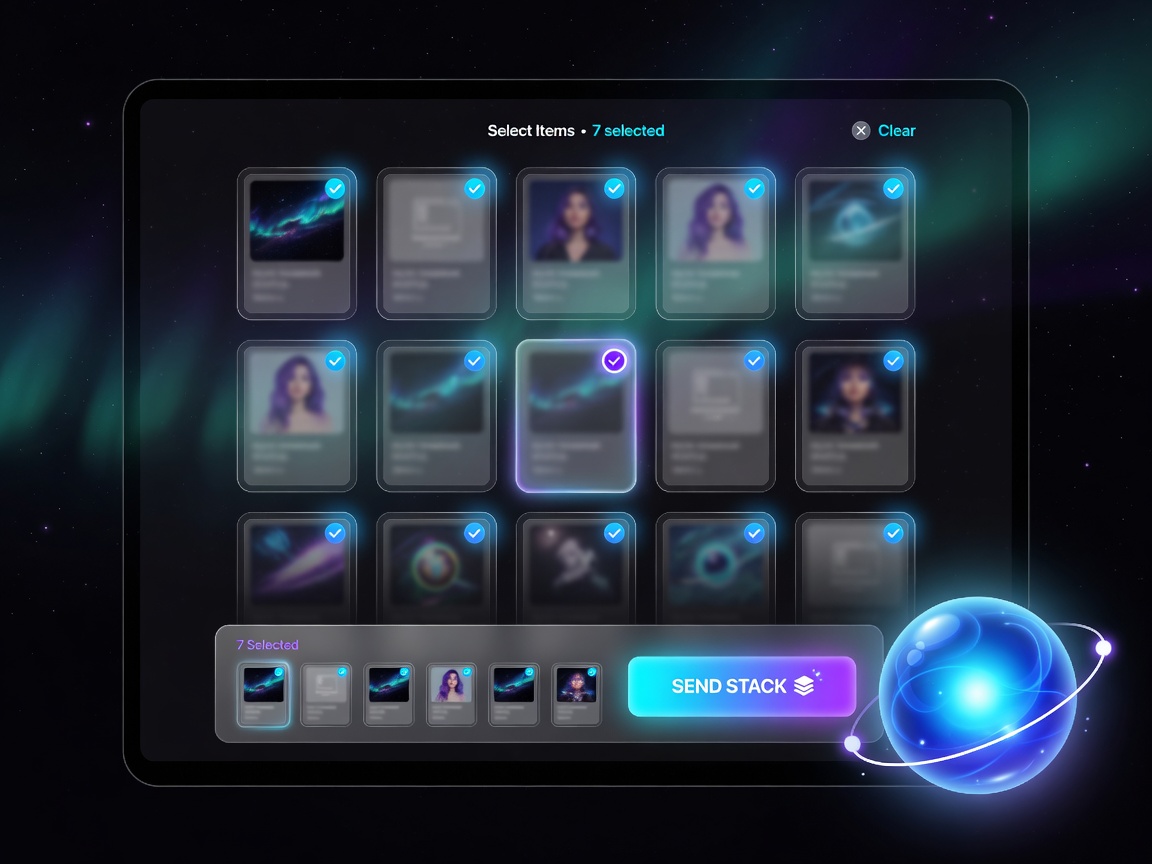
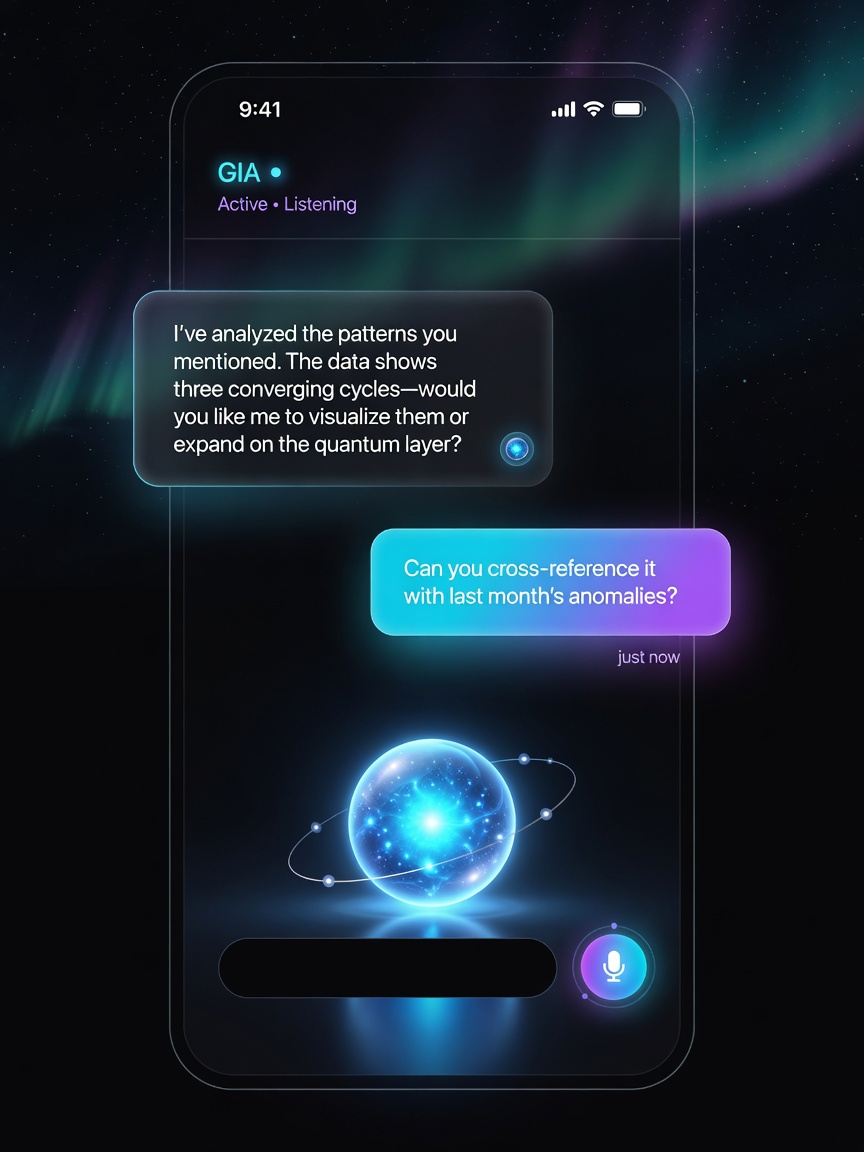
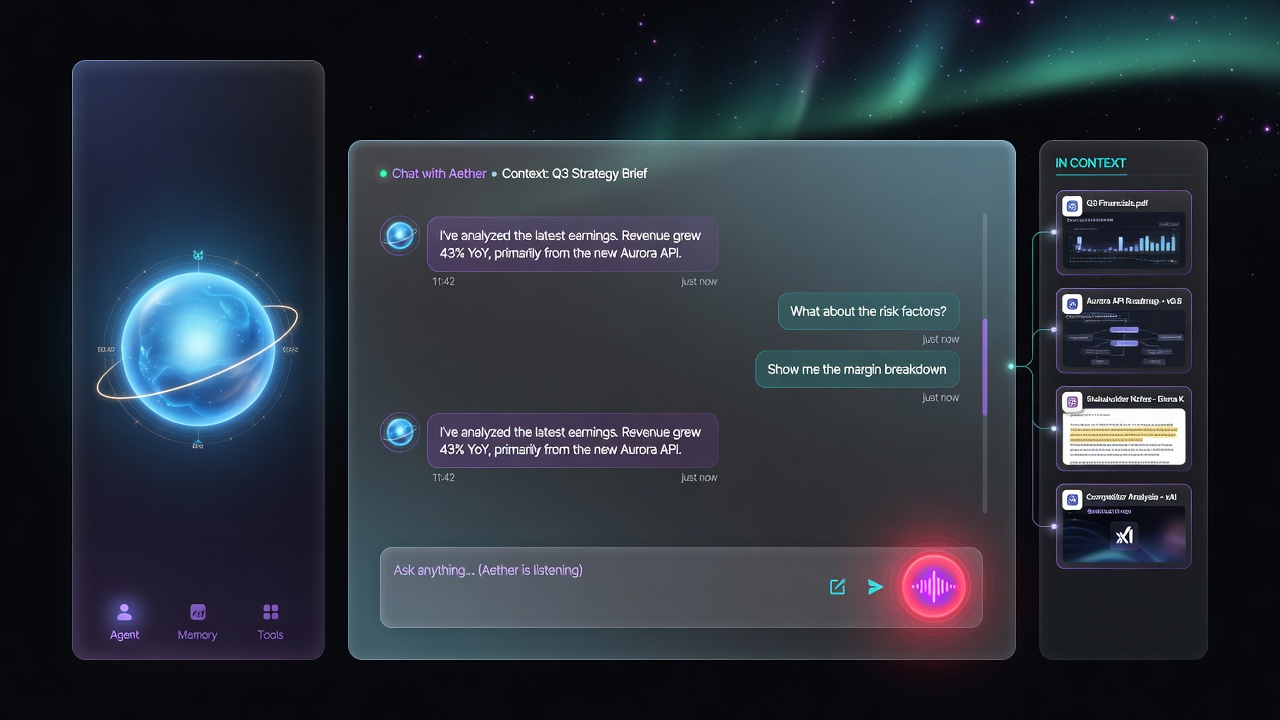
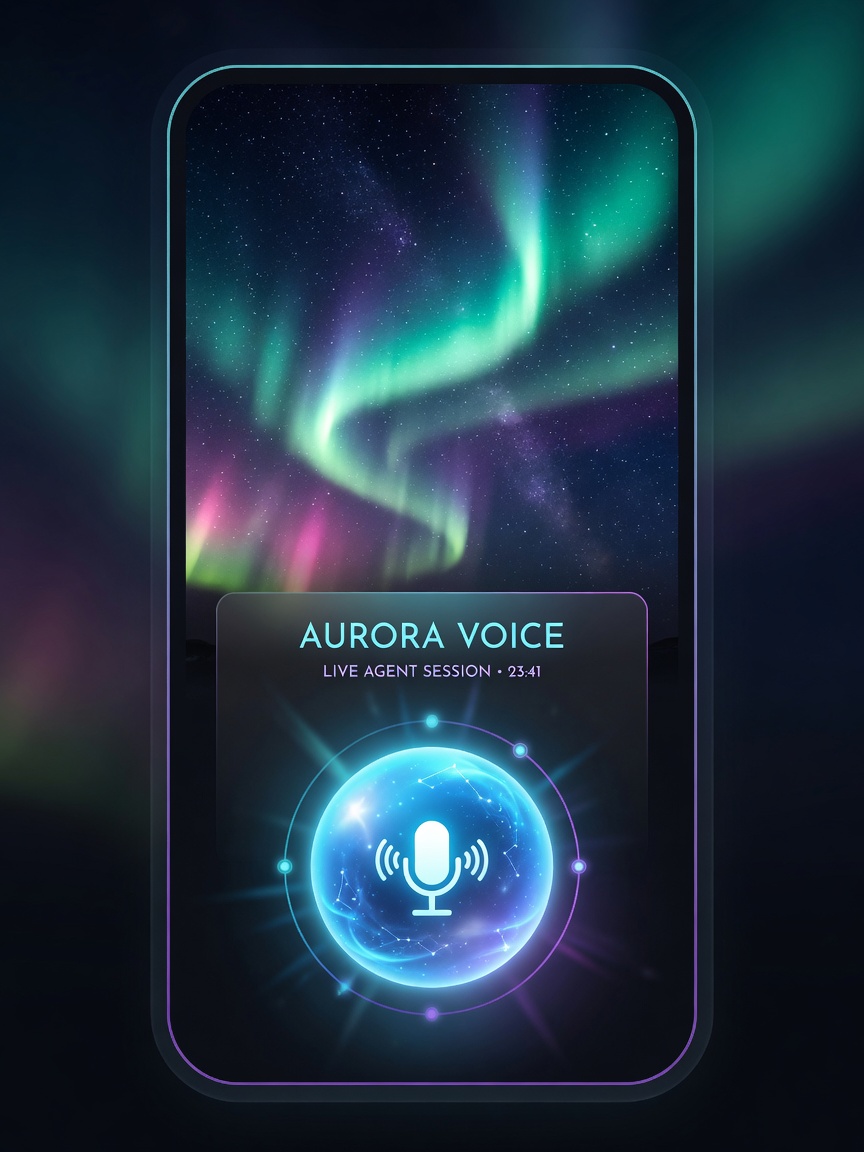
Real image renders (not wireframes) across the views you asked for: 3D cards over the orb, the flipped player-card detail, grid in portrait & landscape, filtering, selection, agent conversation, gesture, lights-out — and the orbit metaphor that replaces "Mode 1/2/3."
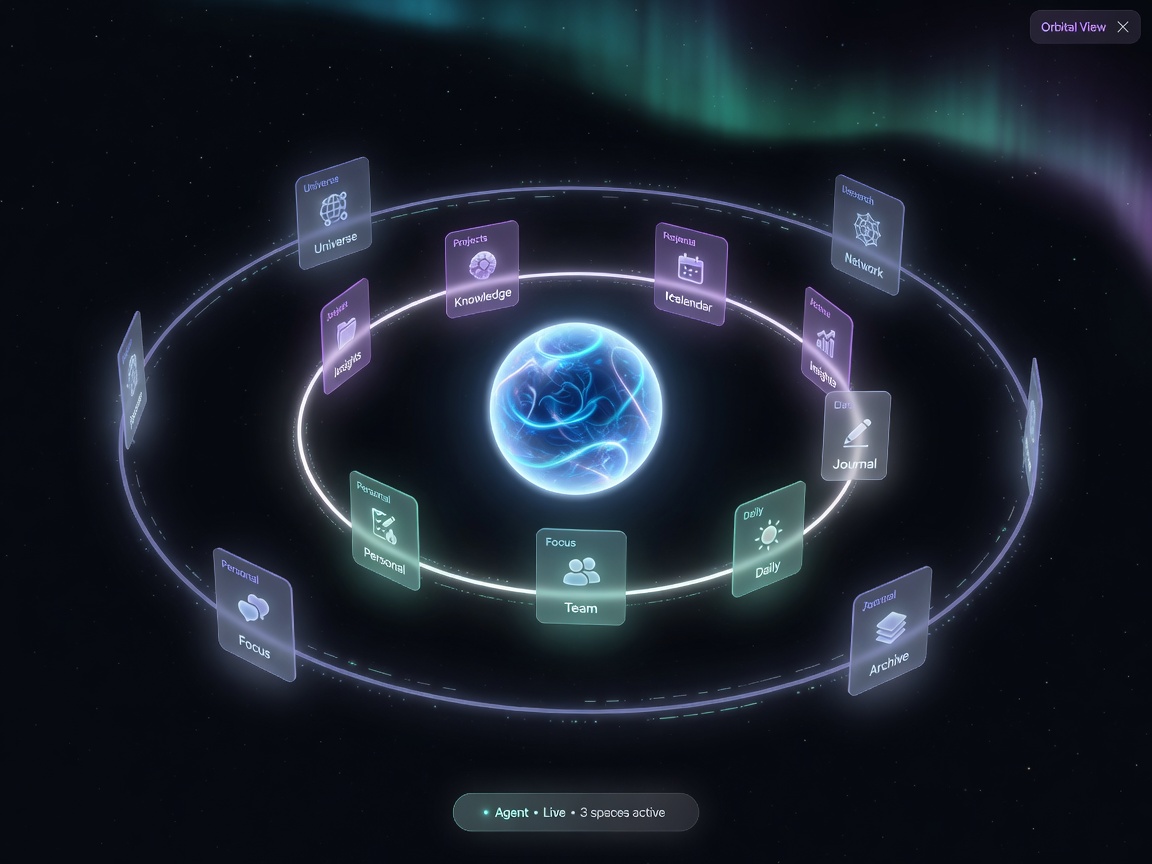
The naming answer (bottom image): drop the numbers. The agent orb is the center; every surface is a space in orbit around it — the closer the orbit, the more private/live (talking to it), the outer orbits calmer/public (your portfolio). It's infinitely extensible: add a space to the orbit for any new service, no arbitrary levels. Named by what they are, not 1/2/3.
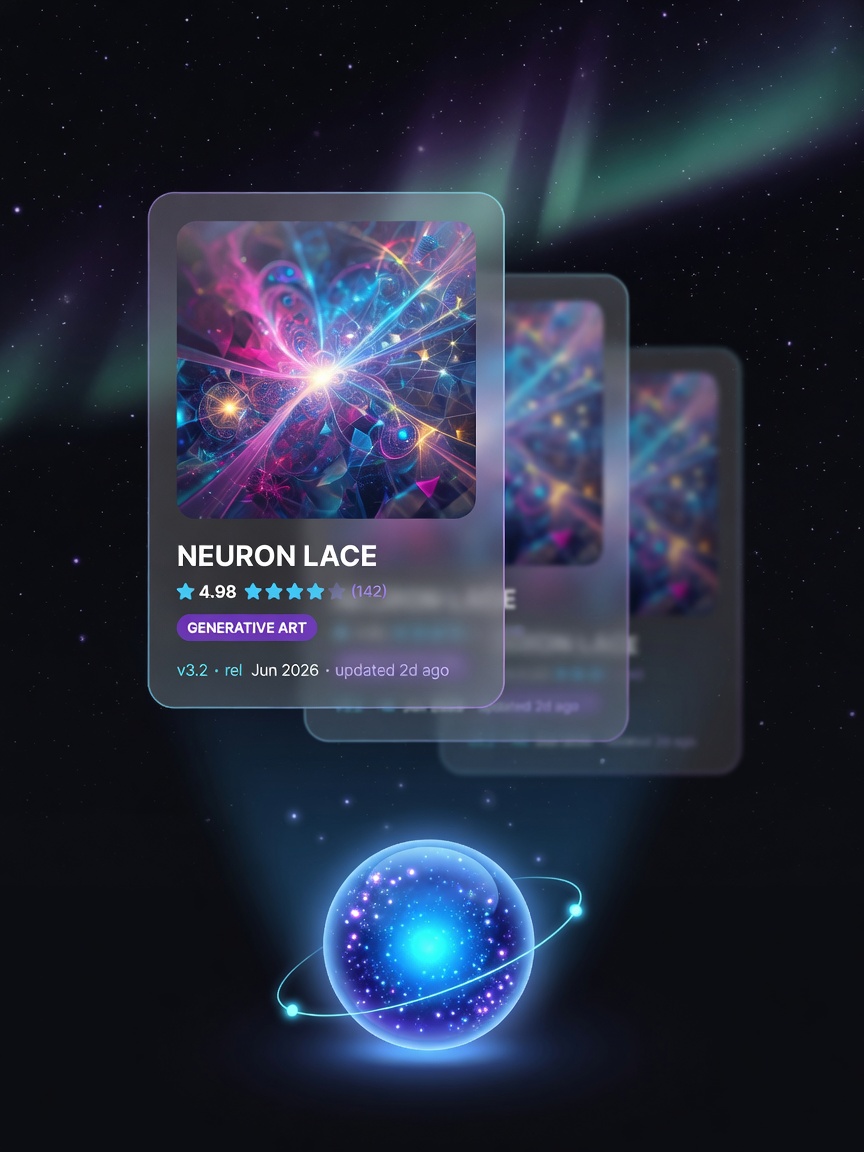
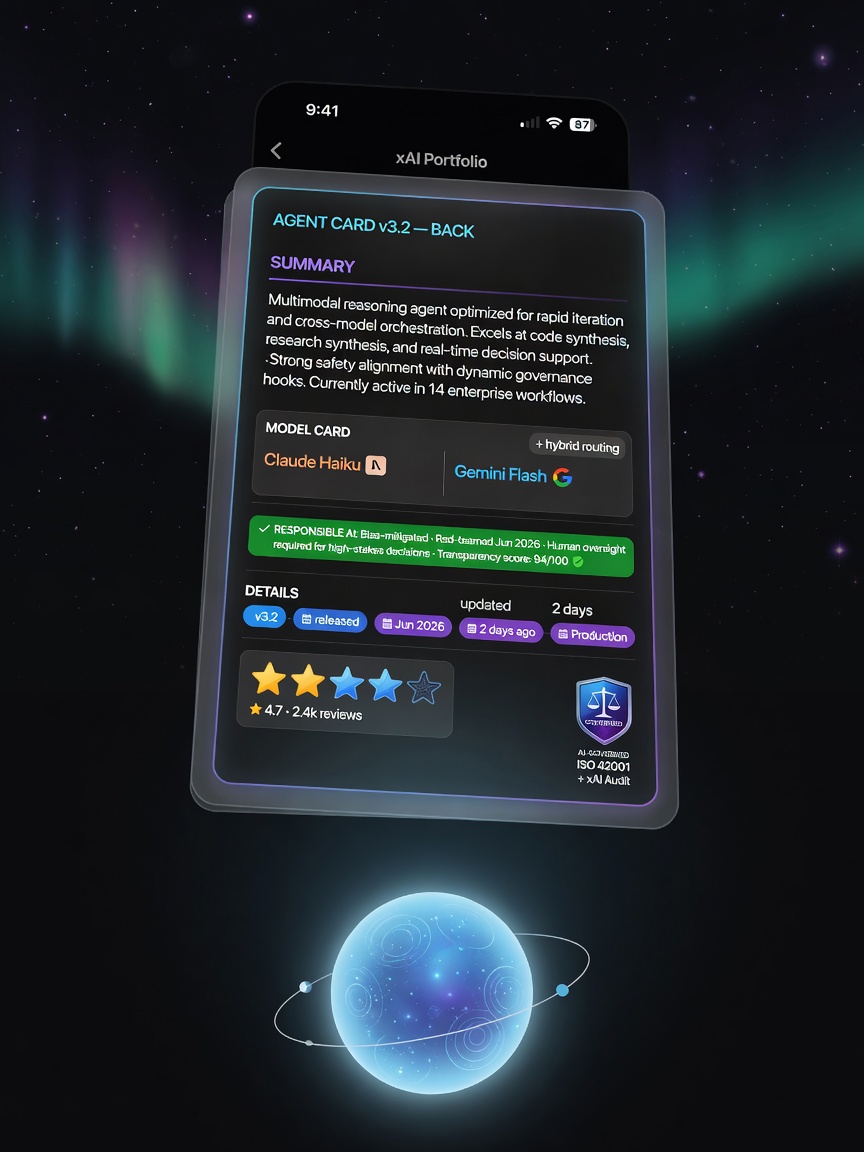
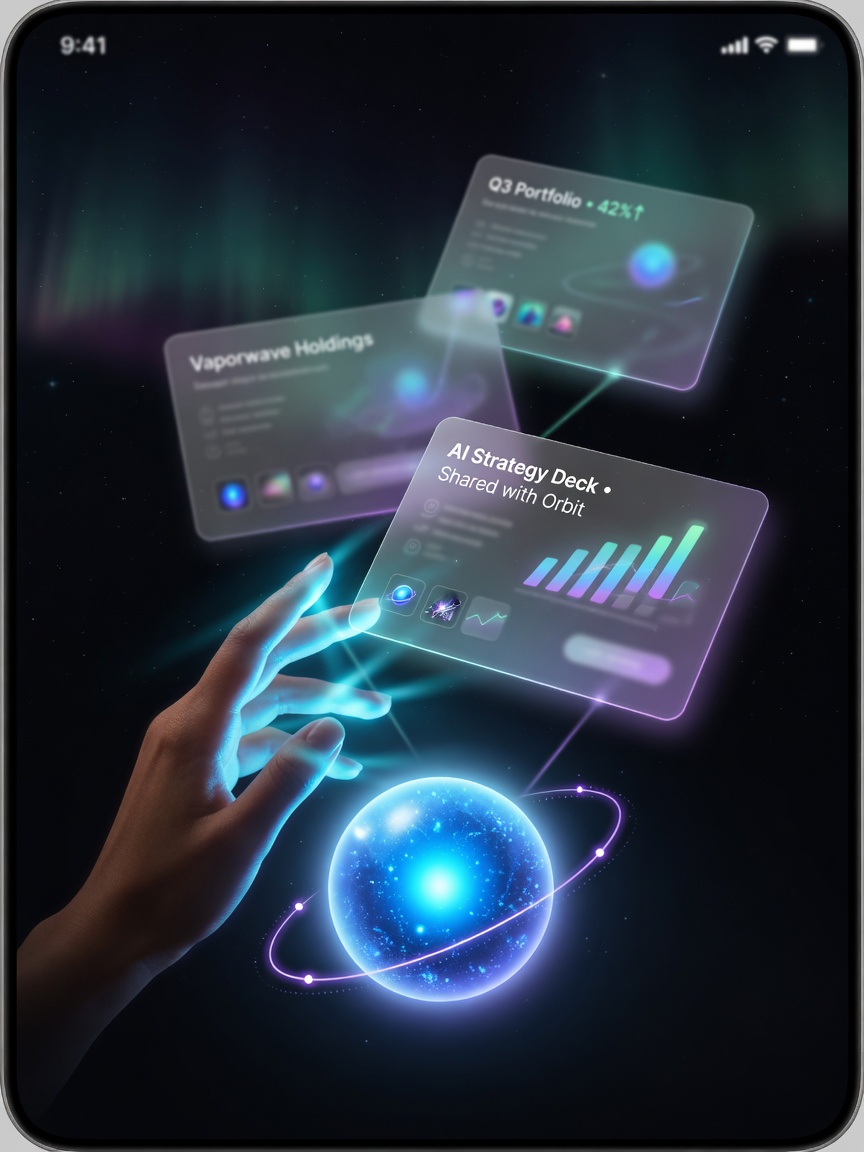
★ The Orbit metaphorAgent at center; surfaces orbit at different intimacy distances. "3 spaces active." Replaces Mode 1/2/3 — extensible to any number of spaces.Cards in 3D above the orbThe gesture paradigm — depth-stacked cards with full metadata: title, rating, class tag, v3.2 · rel Jun 2026 · updated 2d.Tap → player-card backSummary, Model Card, Responsible-AI disclosure, version/released/updated dates, stars, ISO-42001 governance badge.Reaching for the cardsHand-gesture interaction with the floating deck above the orb.Grid · portraitCompact tiles, 2-up, one selected with a ring + check, filter chips on top.Grid · landscape5-up with the orb dock on the left, metadata lines, GOD pill.Filtering into the gridLit chips (CONTENT · UPDATED <30d), deck narrowing, count label.Multi-select → stackCards checked, bottom tray of thumbnails, SEND STACK.Chat with an agent · portraitBubbles + the orb pulsing as the speaker, GIA header, mic.Chat · landscapeOrb dock + conversation panel + "in context" card rail + mic input.Lights-out immersiveOne full-bleed card edge-to-edge, big icon-only mic, no chrome.
Renders are concept art (invented labels/cards) — they show the design language and paradigm at fidelity, not the literal build. ~$0.05 each; happy to render variations (palette, specific real cards, more angles).